Introduction
Digital transformation is no longer driven solely by technology—it is driven by strategy. Organizations today are modernizing applications, migrating to the cloud, adopting artificial intelligence, and strengthening cybersecurity. Yet, without a well-defined Enterprise Architecture (EA), even the most advanced technologies can lead to fragmented systems, duplicated investments, and misaligned business objectives.
Enterprise Architecture provides the strategic framework that connects business goals with technology initiatives. It enables organizations to make informed decisions, optimize IT investments, and create scalable, future-ready enterprises. As a result, Enterprise Architects and IT strategy professionals have become increasingly valuable across industries.
Frameworks such as TOGAF®, the Zachman Framework, and SAP Enterprise Architecture have become the foundation for designing and governing enterprise transformation. Each framework contributes a unique perspective—whether it is architecture development, enterprise classification, or aligning SAP ecosystems with business strategy. Together, they help organizations achieve agility, governance, and long-term success.
For professionals seeking to develop these strategic skills, VERSAtile Reads offers comprehensive study resources, including guidebooks for SAP Enterprise Architecture, TOGAF Foundation, and the Zachman Framework, designed to simplify complex concepts and support certification success.
Why Enterprise Architecture Matters More Than Ever
Modern enterprises operate in increasingly complex environments. Cloud platforms, hybrid infrastructures, AI-powered applications, regulatory requirements, and digital customer experiences all demand strategic coordination.
Without Enterprise Architecture, organizations often encounter:
- Disconnected business and IT strategies
- Redundant applications and systems
- Rising operational costs
- Security and compliance challenges
- Slower digital transformation initiatives
Enterprise Architecture addresses these challenges by providing a structured approach to planning, designing, implementing, and governing technology investments.
Rather than focusing solely on technology, Enterprise Architecture ensures that every IT initiative supports measurable business outcomes. This alignment improves decision-making, enhances agility, and enables sustainable innovation across the organization.
Understanding Enterprise Architecture Frameworks
Enterprise Architecture is not a single methodology. Instead, organizations use different frameworks depending on their business needs and technology landscape.
Among the most widely recognized frameworks are TOGAF, the Zachman Framework, and SAP Enterprise Architecture.
Each framework serves a different purpose while complementing the others.
TOGAF Foundation: The Global Standard for Enterprise Architecture
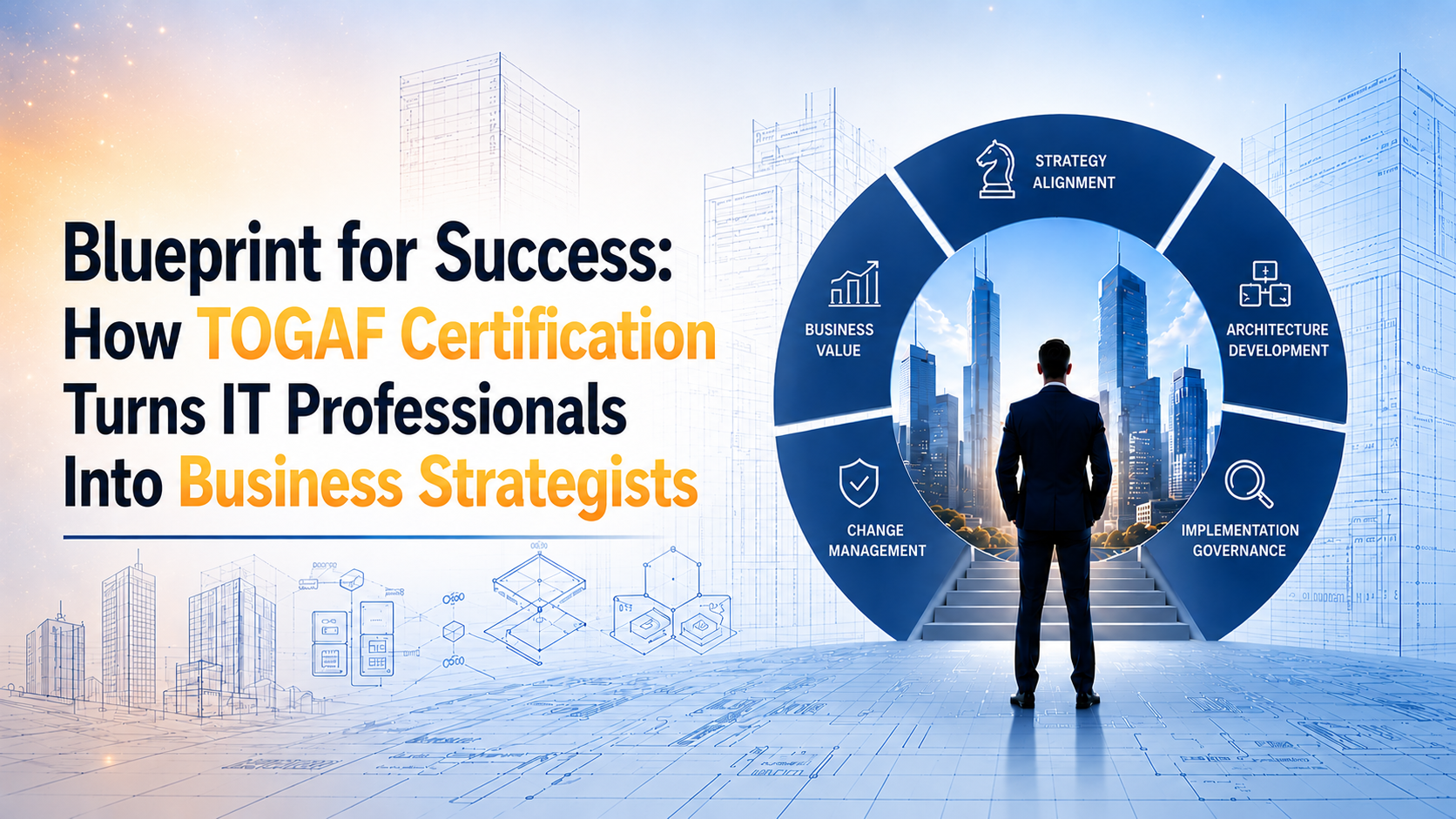
The Open Group Architecture Framework (TOGAF) is one of the world’s most widely adopted Enterprise Architecture standards. It provides a structured methodology for planning, developing, governing, and maintaining enterprise architectures through its Architecture Development Method (ADM).
Professionals learn how to:
- Align business strategy with IT initiatives
- Design architecture roadmaps
- Manage architecture governance
- Support digital transformation projects
- Improve stakeholder communication
TOGAF Foundation serves as the starting point for professionals entering Enterprise Architecture and is recognized across industries worldwide.
Its structured approach makes it particularly valuable for architects, consultants, business analysts, solution architects, and technology leaders.
The Zachman Framework: Organizing Enterprise Knowledge
While TOGAF explains how to develop architecture, the Zachman Framework focuses on how to organize and classify enterprise information.
Using its well-known matrix of stakeholder perspectives and enterprise viewpoints, the Zachman Framework provides a comprehensive taxonomy for describing an organization from multiple dimensions.
It helps professionals understand:
- Business architecture
- Data architecture
- Application architecture
- Technology architecture
- Stakeholder perspectives
- Enterprise relationships
Instead of prescribing a process, Zachman provides a logical structure that improves communication, documentation, and governance across the enterprise.
Many organizations use Zachman alongside TOGAF to create a more complete Enterprise Architecture practice.
SAP Enterprise Architecture: Connecting Business Strategy with SAP Transformation
Organizations running SAP landscapes require an Enterprise Architecture approach tailored to complex business processes and integrated enterprise systems.
SAP Enterprise Architecture extends traditional Enterprise Architecture principles by aligning business capabilities, business processes, applications, data, and technology within SAP environments.
It enables organizations to:
- Modernize SAP landscapes
- Plan cloud migrations
- Optimize enterprise applications
- Support business transformation
- Improve governance across SAP ecosystems
SAP’s Enterprise Architecture approach builds upon recognized Enterprise Architecture principles while providing guidance specific to SAP technologies and digital transformation initiatives.
As SAP continues evolving toward cloud-first platforms, Enterprise Architecture skills have become increasingly valuable for SAP consultants, architects, and digital transformation leaders.
Why Enterprise Architecture Skills Are in High Demand
Enterprise Architecture is no longer limited to large consulting firms.
Organizations across finance, healthcare, manufacturing, retail, telecommunications, government, and cloud service providers increasingly rely on Enterprise Architects to guide technology investments.
Professionals with Enterprise Architecture expertise help organizations:
- Reduce technology complexity
- Improve business agility
- Govern digital transformation
- Support cloud adoption
- Optimize technology investments
- Strengthen enterprise governance
As digital initiatives become more strategic, professionals who understand both business and technology continue to be highly sought after.
A Practical Learning Path for Future Enterprise Architects
Building Enterprise Architecture expertise requires more than memorizing terminology. Professionals must understand how frameworks complement one another.
A recommended learning path includes:
Step 1: Learn Enterprise Architecture fundamentals.
Step 2: Build a strong foundation with the TOGAF Foundation.
Step 3: Understand enterprise classification using the Zachman Framework.
Step 4: Apply Enterprise Architecture concepts within SAP environments.
Step 5: Continue developing practical architecture, governance, and business strategy skills.
Following this progression helps learners develop both theoretical understanding and practical decision-making capabilities.
How VERSAtile Reads Supports Your Enterprise Architecture Journey
Learning Enterprise Architecture can be challenging because of the large volume of concepts, terminology, frameworks, and methodologies.
VERSAtile Reads simplifies the learning experience through professionally developed resources that focus on clarity, structure, and practical understanding.
The Enterprise Architecture collection includes:
- SAP Enterprise Architecture Guidebook
- TOGAF Foundation Exam Cram Notes and Practice Questions
- Zachman Framework Guide
These resources are designed to help learners:
- Understand Enterprise Architecture concepts
- Prepare for certification exams
- Build strategic thinking skills
- Connect business strategy with technology
- Develop real-world Enterprise Architecture knowledge
Whether you are beginning your Enterprise Architecture journey or strengthening your expertise, these guides provide a structured path toward professional growth.
Career Opportunities in Enterprise Architecture
Enterprise Architecture opens doors to numerous high-value technology leadership roles, including:
- Enterprise Architect
- Solution Architect
- Business Architect
- SAP Enterprise Architect
- Cloud Architect
- Digital Transformation Consultant
- Technology Strategy Consultant
- IT Governance Manager
These roles require professionals who can bridge the gap between executive strategy and technical implementation.
As organizations continue investing in digital transformation, Enterprise Architecture professionals will remain essential to long-term business success.
Conclusion
Technology alone does not create successful digital transformation—strategy does.
Enterprise Architecture provides the structure needed to align technology investments with business objectives, improve governance, and build resilient organizations.
Frameworks such as TOGAF Foundation, the Zachman Framework, and SAP Enterprise Architecture equip professionals with the knowledge to design, manage, and evolve enterprise technology landscapes effectively.
Through its specialized guidebooks, VERSAtile Reads empowers learners to master Enterprise Architecture concepts, prepare for certifications, and develop the strategic skills required in today’s technology-driven business environment.
If your goal is to move beyond implementation and become a technology strategist, Enterprise Architecture is the next step in your professional journey.
FAQs
1. Why should you learn Enterprise Architecture?
Enterprise Architecture helps professionals align business strategy with technology initiatives, making it an essential skill for digital transformation, IT governance, and strategic planning.
2. Should you learn TOGAF, the Zachman Framework, or SAP Enterprise Architecture first?
For most learners, the TOGAF Foundation provides the best starting point. The Zachman Framework complements TOGAF by organizing enterprise knowledge, while SAP Enterprise Architecture is ideal for professionals working in SAP environments.
3. How can VERSAtile Reads help me prepare for Enterprise Architecture certifications?
VERSAtile Reads provides structured guidebooks covering SAP Enterprise Architecture, TOGAF Foundation, and the Zachman Framework, helping learners understand core concepts, prepare efficiently, and build practical enterprise architecture skills.