Introduction
Technology decisions have never carried more weight. Organizations that choose the wrong architecture today risk falling behind competitors, overspending on misaligned systems, and struggling to adapt when business needs change.
This is the domain of enterprise architecture. And at the center of enterprise architecture sits one globally recognized standard: TOGAF — The Open Group Architecture Framework. TOGAF is the world’s most widely adopted enterprise architecture framework.
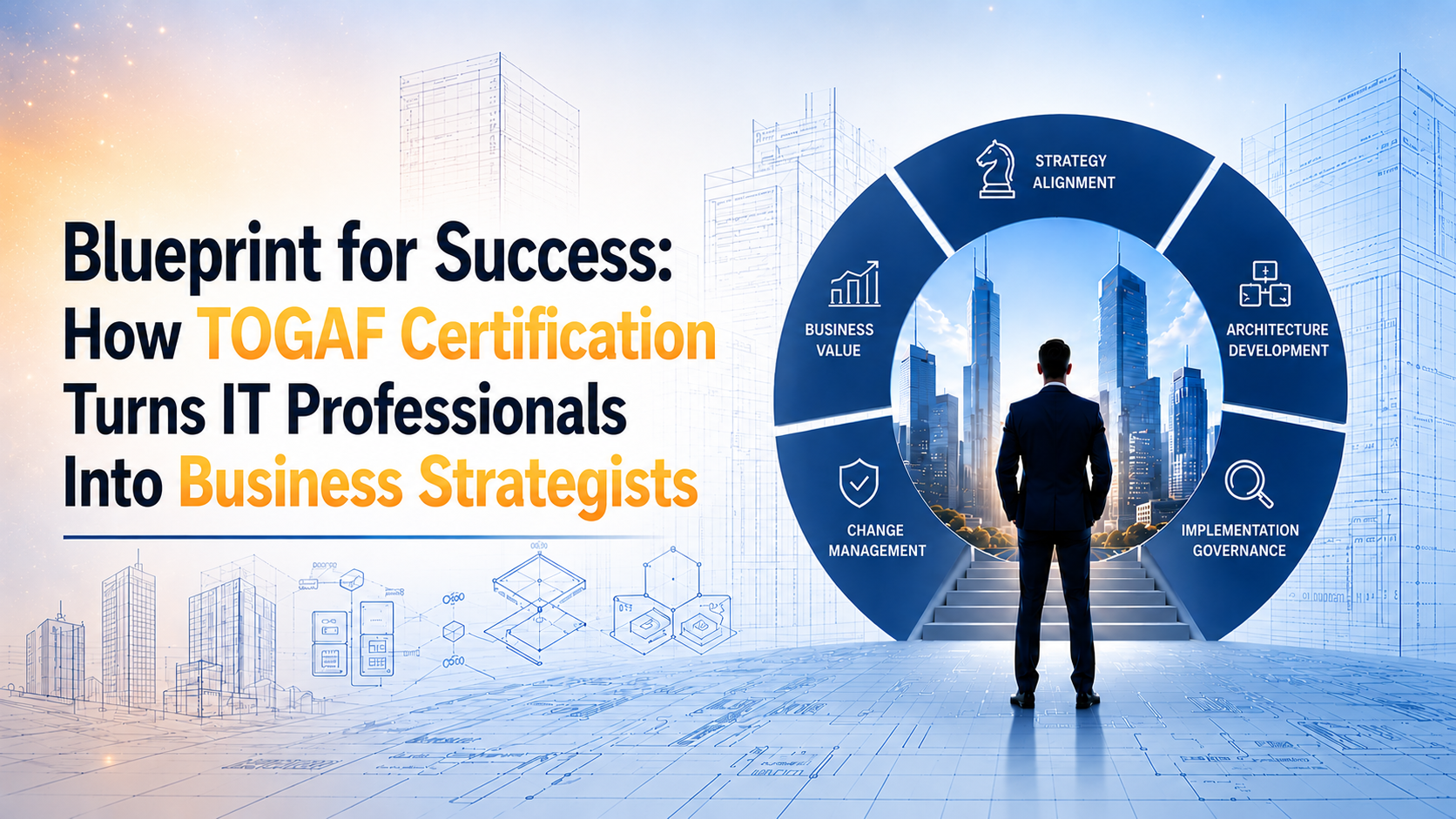
IT professionals who earn TOGAF certification do not just understand technology. They understand how technology serves business. That distinction is what transforms technical specialists into strategic leaders.
VERSAtile Reads supports enterprise architecture learners through structured Guidebooks, Exam Cram Notes, and Practice Questions that make TOGAF preparation accessible, efficient, and effective.
What Is Enterprise Architecture?
Enterprise Architecture is the practice of analyzing, designing, planning, and implementing enterprise analysis to successfully execute on business strategies.
At its core, it answers:
- How does our technology support our business strategy?
- How are our systems, data, applications, and infrastructure connected?
- How should we design our technology landscape to support future growth?
- How do we manage change across complex organizational environments?
- How do we ensure technology investments deliver measurable business value?
What Is TOGAF?
TOGAF is an enterprise architecture framework developed and maintained by The Open Group. It provides a comprehensive approach to enterprise architecture, including a structured methodology, a common vocabulary and set of tools, recommended standards and compliance requirements, and methods for integrating architecture with business strategy.
| TOGAF Component | Purpose |
| Architecture Development Method (ADM) | Core iterative process for developing enterprise architecture |
| Architecture Content Framework | Defines architecture deliverables, artifacts, and building blocks |
| Enterprise Continuum | Repository of architecture assets and best practices |
| Architecture Capability Framework | Guidance for establishing and operating an architecture practice |
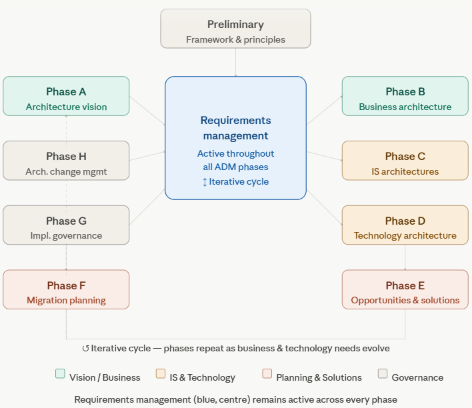
The TOGAF Certification Path
TOGAF Foundation (Level 1)
The TOGAF Foundation certification validates a fundamental understanding of the TOGAF standard, its terminology, structure, and core concepts.
Key topics include:
- TOGAF basic concepts and terminology
- Architecture Development Method (ADM) phases
- Architecture Content Framework
- Enterprise Continuum and Architecture Repository
- Architecture Governance and Building Blocks concepts
Best for: IT professionals and business analysts beginning their enterprise architecture journey.
TOGAF Certified (Level 2)
Builds on Foundation knowledge and validates the ability to analyze and apply TOGAF concepts in real-world enterprise architecture scenarios. Topics include applying and adapting the ADM, architecture governance and compliance, stakeholder management, and architecture maturity models.
Best for: Experienced IT professionals and architects applying TOGAF in organizational contexts.
TOGAF Business Architecture (Specialist)
A specialist certification focused on business architecture, covering the alignment between business strategy and enterprise architecture design.
Best for: Professionals focusing on business transformation and strategy alignment.
Why TOGAF Certification Matters for IT Professionals
- Strategic Thinking: TOGAF teaches professionals to evaluate technology decisions in the context of business strategy and long-term vision rather than immediate technical requirements.
- Common Language: TOGAF provides a shared vocabulary that enables clearer, more productive conversations across organizational boundaries between technology and business stakeholders.
- Structured Decision-Making: The TOGAF ADM provides a repeatable, structured process for developing and managing enterprise architecture, reducing the risk of ad-hoc technology decisions.
- Career Differentiation: TOGAF certification signals to employers that a professional can operate at the intersection of technology and business strategy — a capability that commands significantly higher responsibility and compensation.
Enterprise Architecture Career Paths
| Enterprise Architecture Role | Primary Responsibilities |
| Enterprise Architect | Designing and governing the overall technology landscape |
| Solution Architect | Designing specific technology solutions within the enterprise architecture |
| Business Architect | Aligning business processes and strategy with technology capabilities |
| IT Strategy Consultant | Advising organizations on technology investment and transformation |
| Digital Transformation Lead | Leading technology-driven business transformation initiatives |
| Chief Architect | Leading the organization’s architecture practice and governance |
The Business Case for TOGAF in Modern Organizations
- Reduced Complexity: A structured architecture framework reduces technology sprawl and simplifies the organization’s technology landscape over time.
- Improved Alignment: Enterprise architecture ensures that technology investments are aligned with business strategy, reducing wasted spending.
- Faster Change Management: A well-governed architecture enables organizations to respond more rapidly to market changes and new business opportunities.
- Better Risk Management: Enterprise architecture provides visibility into technology dependencies, risks, and vulnerabilities that would otherwise remain hidden.
- Cost Optimization: By identifying redundant systems and rationalizing applications, enterprise architecture helps organizations reduce technology costs significantly.
Common Challenges in TOGAF Exam Preparation
- Extensive Framework Content: TOGAF is a comprehensive framework with extensive documentation. Identifying the most critical concepts for exam success requires focused preparation.
- ADM Phase Complexity: The Architecture Development Method consists of multiple phases, each with specific inputs, outputs, and objectives that candidates must understand in detail.
- Scenario-Based Application: TOGAF Level 2 exams present complex scenarios that require candidates to apply framework principles to real-world situations.
- Terminology Precision: TOGAF uses specific terminology that must be understood accurately. Confusing related terms is a common source of errors.
How VERSAtile Reads Supports TOGAF Certification Success
- Guidebooks: Structured learning materials that explain cloud concepts progressively, from foundational principles to advanced architecture topics.
- Exam Cram Notes: These are concise, high-impact summaries of the most critical cloud topics — designed for busy professionals who need to maximize retention within limited study windows.
- Practice Questions: These are scenario-based, exam-style questions that test real-world cloud knowledge and build exam confidence.
The Future of Enterprise Architecture
- Digital Transformation — organizations undergoing transformation increasingly rely on enterprise architects to design scalable, future-ready technology landscapes
- Cloud Architecture — enterprise architects must now design hybrid and multi-cloud environments balancing performance, cost, security, and compliance
- Agile Architecture — modern enterprise architecture is becoming more iterative and aligned with agile delivery methodologies
- AI Integration — enterprise architects play a critical role in defining how AI capabilities integrate with existing systems
- Data Architecture — the growth of data-driven decision-making is elevating the importance of data architecture
Conclusion
In a world where technology decisions shape competitive outcomes, organizations cannot afford to build their systems without a blueprint. Enterprise architecture provides that blueprint, and TOGAF is the global standard for creating it.
With structured Guidebooks, concise Exam Cram Notes, and scenario-based Practice Questions, VERSAtile Reads gives enterprise architecture learners everything they need to earn TOGAF certification, develop strategic thinking capabilities, and build careers at the highest levels of technology leadership. Your blueprint for success starts here.
FAQs
Q1. Do you need prior enterprise architecture experience to pursue TOGAF certification?
TOGAF Foundation is accessible to IT professionals without prior enterprise architecture experience. TOGAF Certified is better suited to professionals with some experience applying architecture concepts in organizational settings.
Q2. Is TOGAF certification recognized globally?
Yes. TOGAF is the world’s most widely adopted enterprise architecture framework, and TOGAF certifications are recognized by organizations in virtually every industry and country.
Q3. How does VERSAtile Reads help with TOGAF preparation?
VERSAtile Reads offers Guidebooks, Exam Cram Notes, and Practice Questions that cover TOGAF certification content comprehensively, helping learners understand framework concepts, revise efficiently, and apply knowledge confidently in scenario-based exams.