
Introduction
Cybersecurity threats continue to evolve rapidly, and organizations worldwide are investing heavily in Security Operations Centers (SOCs) to detect, analyze, and respond to cyber threats. As a result, the demand for skilled cybersecurity professionals who can monitor networks, investigate incidents, and protect digital assets is growing significantly.
One of the most recognized entry-level certifications for aspiring SOC analysts is the Cisco Certified CyberOps Associate offered by Cisco Systems. This certification validates the foundational knowledge required to work in a SOC environment and helps professionals begin a successful cybersecurity career.
At VERSAtile Reads, we provide structured exam preparation resources, practice questions, and study guides designed to help learners confidently prepare for certifications like the Cisco CyberOps Associate exam.
Understanding the Cisco CyberOps Associate Certification
Before starting exam preparation, it is important to understand what the certification covers and what skills are expected. The Cisco Certified CyberOps Associate is designed for individuals who want to work in cybersecurity operations, especially in Security Operations Centers.
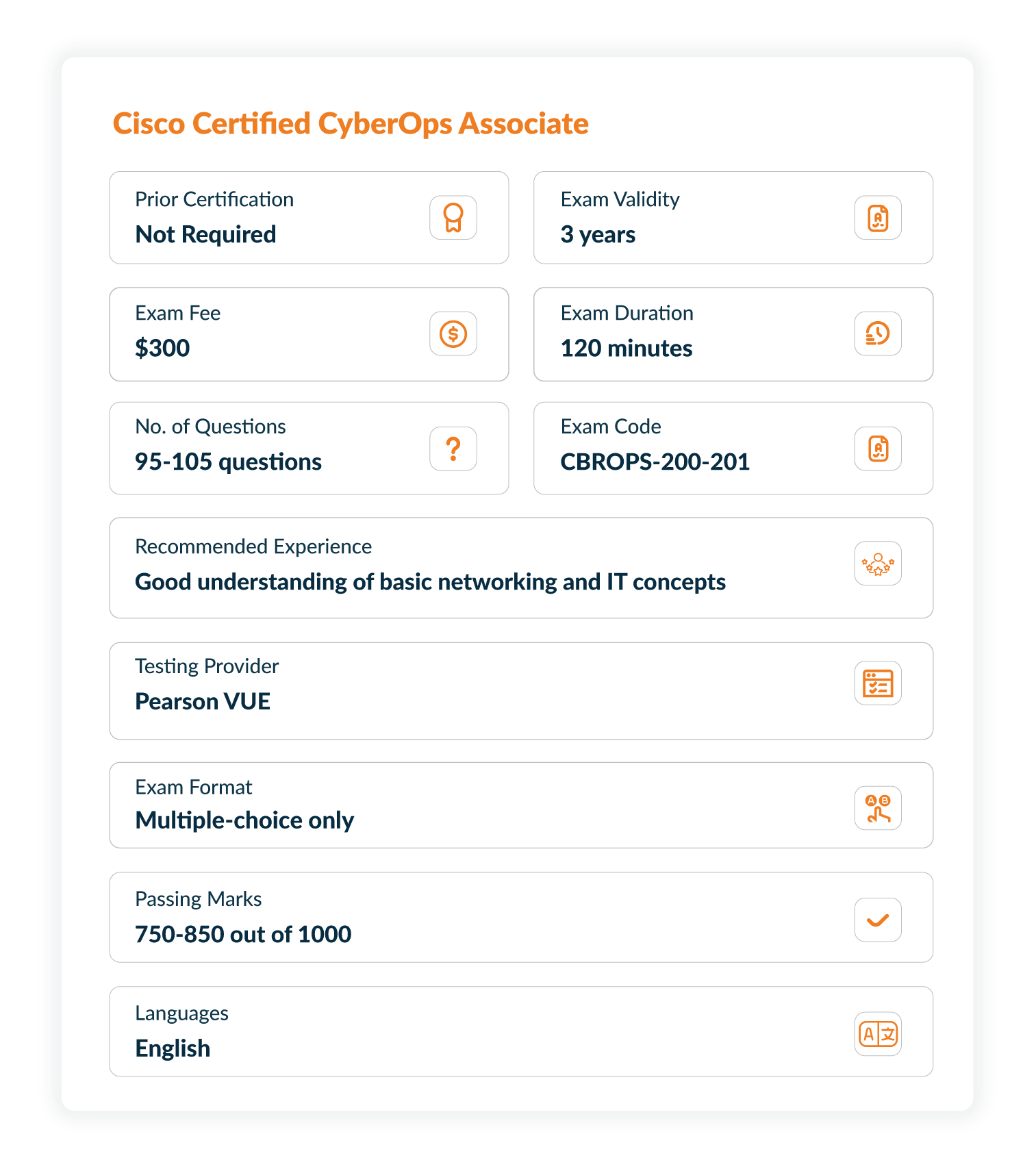
The certification is achieved by passing the Cisco 200-201 CBROPS Exam, which evaluates knowledge related to security monitoring, network intrusion analysis, and incident response. The exam measures how well a candidate can identify cyber threats and investigate suspicious activity.
The exam focuses on several core areas, including security concepts, host-based analysis, network intrusion detection, and security policies. Understanding these domains helps candidates create an effective study plan and prioritize the most important topics.
The Certification Exam
The Cisco CyberOps Associate certification course evaluates candidates’ understanding and proficiency in foundational cybersecurity concepts, preparing them for roles in Security Operations Centers (SOCs). This comprehensive assessment focuses on key principles, tools, and practices related to securing networks and responding to threats.
- Cybersecurity Fundamentals: This domain assesses candidates’ understanding of core cybersecurity principles, including the CIA triad (confidentiality, integrity, availability), common attack types, and defense strategies in network security.
- Security Monitoring and Analysis: Candidates are evaluated on their ability to use tools such as Security Information and Event Management (SIEM) systems for monitoring, detecting, and analyzing security threats.
- Incident Response and Handling: This section focuses on candidates’ knowledge of the incident response lifecycle, including preparation, detection, containment, eradication, and recovery strategies for effective threat management.
- Cisco Security Tools and Technologies: Candidates must demonstrate their proficiency in using Cisco solutions, such as Firepower and SecureX, to defend against and mitigate network threats.
- Network Protocols and Packet Analysis: This domain evaluates candidates’ understanding of key network protocols, such as TCP/IP and HTTP, and their ability to analyze network traffic for malicious activity.
- Threat Intelligence and Vulnerability Management: Candidates are assessed on their ability to utilize threat intelligence sources and tools for identifying vulnerabilities and securing systems against emerging threats.
- Compliance and Governance: This domain emphasizes the importance of regulatory compliance, governance frameworks, and ethical practices in cybersecurity operations.
Build a Structured Study Plan
Preparing for the Cisco CyberOps Associate exam requires a structured and consistent study approach.
Step 1: Understand the Exam Blueprint
Start by reviewing the official exam topics and understanding each domain’s weight. This allows you to focus your study time on areas that contribute most to the exam.
A clear roadmap ensures you cover every required concept.
Step 2: Learn Core Cybersecurity Fundamentals
Before diving into advanced topics, ensure you have a solid understanding of networking, operating systems, and security fundamentals.
Concepts like TCP/IP, DNS, firewalls, authentication methods, and encryption form the foundation of cybersecurity operations.
Step 3: Practice with Realistic Questions
Practice questions are one of the most effective ways to prepare for certification exams. They help you identify weak areas, improve time management, and familiarize yourself with exam formats.
At VERSAtile Reads, our practice questions are carefully designed to reflect real exam scenarios and provide detailed explanations that strengthen your understanding of key concepts.
Step 4: Focus on SOC Analyst Skills
The CyberOps certification emphasizes practical SOC operations. While studying, focus on learning how analysts detect and investigate threats.
Key skills include:
- Log analysis
- Threat detection
- Incident investigation
- Security event correlation
Understanding these operational tasks will help you apply theoretical knowledge effectively.
Step 5: Review and Reinforce Concepts
Consistent revision is essential for long-term retention.
Use summary notes, flashcards, and practice exams to reinforce key topics. Repeated exposure to concepts helps improve confidence and recall during the exam.
Exam Information
Building a Strong Foundation in Networking and Security
A solid understanding of networking is essential for cybersecurity professionals. Security analysts must interpret network traffic, detect abnormal behavior, and understand how attackers exploit vulnerabilities in network communication.
Candidates should study networking concepts such as the TCP/IP model, IP addressing, subnetting, and common protocols like HTTP, DNS, and FTP. These concepts help analysts analyze logs, investigate suspicious network activity, and identify unusual patterns in data traffic.
Many cybersecurity learners first develop networking knowledge through certifications such as the Cisco Certified Network Associate (CCNA). Although it is not a strict requirement for the CyberOps Associate exam, familiarity with networking significantly improves understanding of cybersecurity operations.
Developing Skills in Network Intrusion Analysis
Network intrusion analysis is another critical component of cybersecurity operations. This process involves examining network traffic to detect malicious activity and investigate potential security breaches.
SOC analysts frequently use packet analysis tools to inspect network communications. One of the most widely used tools for this purpose is Wireshark, which allows analysts to capture and analyze packets traveling across a network
Through packet analysis, analysts can identify suspicious patterns such as abnormal connections, command-and-control communications, and unauthorized data transfers. Understanding these patterns helps security teams detect attacks early and respond before serious damage occurs.
Hands-on practice with network analysis tools greatly improves exam preparation. By analyzing real network traffic, candidates gain practical experience in identifying potential threats.
Understanding Incident Response and Security Procedures
Incident response is a structured approach used by organizations to handle cybersecurity incidents. When a security alert indicates a potential attack, analysts follow a defined process to investigate and contain the threat.
The typical incident response lifecycle includes preparation, detection, analysis, containment, eradication, and recovery. Each stage focuses on minimizing damage and restoring systems to normal operation.
Candidates preparing for the CyberOps Associate exam should also understand the importance of documentation and communication during incident response. Security teams must record their findings, report incidents to management, and coordinate with other IT departments.
These procedures ensure that organizations can respond quickly to cyber threats while maintaining proper security policies and compliance standards.
Conclusion
The Cisco Certified CyberOps Associate certification is an excellent starting point for individuals who want to build a career in cybersecurity operations. It validates the skills required to monitor networks, detect threats, and respond to security incidents in a Security Operations Center environment.
Preparing for this certification requires a balanced combination of theoretical knowledge and practical experience. Candidates must understand networking fundamentals, cybersecurity principles, security monitoring processes, and intrusion analysis techniques. Hands-on practice with cybersecurity tools and training platforms further strengthens these skills.
FAQs
1. Who should take the Cisco CyberOps Associate certification?
The Cisco Certified CyberOps Associate certification is ideal for beginners who want to start a career in cybersecurity. It is particularly suitable for individuals interested in SOC analyst roles and cybersecurity monitoring positions.
2. How long does it take to prepare for the CyberOps Associate exam?
Most candidates take around 6–8 weeks to prepare for the Cisco 200-201 CBROPS Exam. The exact preparation time depends on the candidate’s background in networking and cybersecurity.
3. What career opportunities are available after passing the CyberOps Associate exam?
After earning the Cisco Certified CyberOps Associate certification, candidates can pursue roles such as SOC Analyst, Security Operations Analyst, Cybersecurity Technician, and Network Security Analyst. These positions focus on monitoring networks and responding to security threats.