
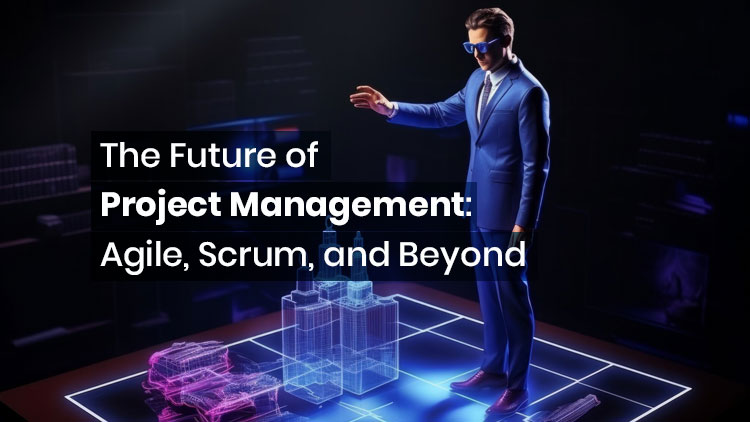
The Future of Project Management: Agile, Scrum, and Beyond
Introduction
Project management has evolved from rigid waterfall models to adaptive frameworks that empower teams to deliver continuous value. Traditional approaches once ruled industries like construction and manufacturing, where outcomes and requirements were stable. But in fast-paced sectors such as software development, digital services, and innovation-driven markets, flexibility and responsiveness have become vital.
Today’s organizations navigate rapidly changing requirements, tight deadlines, distributed teams, and competitive pressures, making it clear that project management cannot remain static. Agile and Scrum methodologies have emerged as leading approaches that redefine how work is planned, executed, and delivered. But the future goes beyond just Agile and Scrum, it involves a blend of evolving methodologies, technology integration, human-centered leadership, and data-driven decision-making.
Are you ready to take your knowledge of project management to the next level? Explore expert resources and guides at VERSAtile Reads, where you can access in-depth books, practical tools, and practice materials to boost your skills and career growth.
The Shift from Traditional to Adaptive Models
For years, project managers followed the Waterfall model, a sequential process where each phase (planning, design, execution, testing, and closure) happened in strict order. This approach relies on stable requirements, detailed upfront planning, and limited change. For predictable environments, such as large-scale construction, this can work well.
However, industries with shifting priorities, complex customer needs, or evolving technology found Waterfall restrictive. Agile emerged as an alternative approach that values iteration, customer feedback, collaboration, and adaptability. Instead of delivering all value at the end of a project, Agile enables teams to deliver increments, reducing risk, improving transparency, and increasing customer satisfaction.
This shift represents a fundamental change in mindset: from rigidly following predetermined plans to embracing change, learning continuously, and adapting to feedback.
Agile and Scrum: Transforming Collaboration
Agile is a philosophy of continuous improvement. It prioritizes individuals, interactions, working outputs, customer collaboration, and responsiveness to change. Scrum is one of the most popular ways to implement Agile principles.
Scrum divides work into short cycles called sprints, typically two to four weeks long, where teams focus on delivering a usable increment of the product. With defined roles such as Product Owner, Scrum Master, and Development Team, Scrum provides structure while preserving flexibility. Daily stand-ups, sprint reviews, and retrospectives foster transparency and continuous learning.
This approach breaks down complex work into manageable pieces, encourages frequent feedback, and empowers teams to self-organize. Instead of waiting until the end of a project to release value, Agile teams deliver regularly, allowing stakeholders to adjust priorities based on evolving needs.
Beyond Scrum: Emerging Methodologies
Although Scrum is widely used, project management is no longer limited to one framework. Organizations are increasingly adopting blended or hybrid models that take the best of multiple methodologies depending on context, complexity, and team maturity.
Kanban, for instance, emphasizes visualization and limiting work in progress to improve flow. It works well for teams with continuous delivery or variable priorities. Lean project management focuses on eliminating waste and maximizing customer value. Scaled frameworks help large organizations coordinate across multiple teams. Hybrid methods combine traditional planning with Agile execution, offering stability at high levels and flexibility at task levels.
This trend reflects a broader understanding: no single framework suffices for all challenges. The future lies in choosing, blending, and tailoring methodologies to meet specific organizational goals.
Technology and the Digital Transformation of Project Management
Technology is accelerating the evolution of project management. Cloud-based platforms enable team collaboration across geographies and time zones. Real-time dashboards visualize progress, dependencies, risks, and priorities. Automation handles repetitive tasks such as reporting, scheduling, and tracking, allowing managers to focus on strategic thinking.
Artificial intelligence (AI) and machine learning are beginning to influence project planning and risk management. Predictive analytics can identify potential bottlenecks, forecast delays, and recommend optimized resource allocation. This shift from experience-driven decisions to data-driven insights helps teams mitigate risk, reduce waste, and improve performance.
In addition, remote work technologies and digital communication tools support distributed teams, transforming how people collaborate and coordinate work. As organizations embrace digital transformation, project management tools become more intelligent, automated, and integrated into everyday workflows.
Human-Centric Leadership and the Future Project Manager
Despite technological advancements, the human aspect remains essential. The best project managers balance technical know-how with emotional intelligence, communication skills, and adaptability.
Today’s leaders act as facilitators, enabling teams, fostering trust, and creating a culture where ideas can be shared openly. They encourage psychological safety, support continuous learning, and guide teams through uncertainty. With remote and hybrid work becoming commonplace, cultural sensitivity and virtual leadership skills have become key competencies.
Future project managers will need to blend strategic insight with empathy, inspire cross-functional collaboration, and navigate culturally diverse teams. Their role will extend beyond delivery — towards innovation leadership, organizational alignment, and value creation.
Emerging Trends Shaping Tomorrow’s Project Management
Several trends will influence how organizations approach project work in the coming years:
- Intelligent tools will assist in forecasting timelines and risks, making planning more accurate and dynamic.
- Time-consuming administrative tasks will become fully automated.
- Environmental, social, and governance (ESG) goals will become integral to project planning.
- Success will be measured not just by deadlines and budgets, but by customer impact and long-term value.
- Continuous Learning Culture: Projects will emphasize learning cycles, experimentation, and knowledge sharing across teams.
- Organizations that adapt to these trends, combining innovation with stability, will lead the future of work.
Challenges Ahead
Of course, this transformation is not without obstacles. Many organizations struggle with change resistance when shifting from traditional frameworks to Agile practices. Inconsistent training and superficial adoption can hinder meaningful transformation.
Additionally, overreliance on technology without proper governance may dilute human judgment and creative problem-solving. Integrating data-driven tools with intuitive leadership becomes essential. Complex global projects also demand sophisticated coordination, governance frameworks, and cross-team alignment.
Blending flexibility with discipline, innovation with structure, and technology with human insight will be crucial to overcoming future challenges.
Conclusion
The future of project management extends far beyond traditional methods, Agile, and Scrum. While Agile frameworks revolutionized collaboration and adaptability, emerging trends, including hybrid methodologies, intelligent automation, human-centric leadership, and value-based metrics, are shaping a new era of work.
Successful organizations will not cling to a single methodology. Instead, they will embrace flexibility, foster continuous learning, and integrate innovation into everyday processes. Project managers for tomorrow will need to combine technical expertise with emotional intelligence, strategic vision, and the ability to lead diverse, distributed teams.
As the world continues to evolve, project management will be defined by its ability to adapt, deliver continuous value, and inspire teams to achieve more.
FAQs
1. What sets Agile apart from traditional project management?
Agile emphasizes frequent delivery of incremental value, continuous customer feedback, and responsiveness to change compared to traditional models, which rely on fixed plans and sequential phases.
2. Can organizations combine Agile with other project management methodologies?
Yes. Many organizations adopt hybrid models that mix Agile’s flexibility with traditional planning to suit both strategic governance and operational needs.
3. What skills will future project managers need the most?
Future project managers will need strong leadership, emotional intelligence, digital literacy, adaptability, and data-driven decision-making skills in addition to technical expertise.
- Published Date: