
Introduction
Azure interviewers assess applicants based on significantly more than just their ability to recollect services and certifications. They concentrate on fundamental technical abilities, such as comprehending Azure services, system design, and coding, while closely monitoring applicants’ problem-solving approaches through scenario-based questions and failure-handling discussions. Practical experience, including personal projects and implementation details, is valued equally because it demonstrates how well a candidate uses theory in real-world Azure contexts.
Beyond technical skills, interviewers evaluate candidates’ ability to convincingly explain their ideas, connect technological decisions to business objectives, and display sound judgment in areas such as security, cost management, and scalability. Strong candidates explain their thought process clearly, reinforced by analogies or illustrations as appropriate. Evaluation criteria also differ by position and certification level, ranging from basic cloud understanding to advanced architectural and optimization abilities. Finally, Azure interviewers emphasize competence, versatility across interview formats, and professional characteristics such as teamwork, accountability, and a growth attitude, emphasizing how candidates think and communicate solutions rather than just what they know. This blog delves into the important aspects interviewers evaluate.
Core Technical Competence in Azure Roles
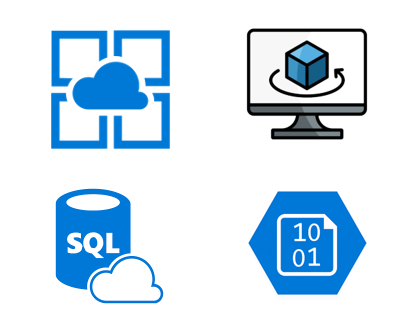
Interviewers anticipate a solid basic understanding of Azure services relevant to the job, such as compute, storage, networking, identity, and security. Candidates should know when and why to use Azure App Service, Virtual Machines, Azure SQL Database, and Blob Storage. For example, articulating why App Service is recommended over VMs for managed scalability indicates service comprehension rather than memorization.
Evaluating Problem-Solving and Analytical Thinking
Solving problems is one of the most important parts of the Azure screening process. Candidates are frequently faced with open-ended tasks, such as identifying performance degradation or creating a scalable application. Interviewers evaluate how applicants break down problems into smaller sections, uncover potential root causes, and provide viable solutions using Azure services. A clear and methodical approach is more important than getting one “correct” answer.
The Role of Scenario-Based and Failure-Handling Questions
Scenario-based questions examine candidates’ abilities to handle real-world failures and respond effectively under duress. Interviewers may question how to handle a failed deployment, a regional outage, or a security incident. Strong candidates can describe monitoring strategies, alarm mechanisms, rollback procedures, redundancy planning, and post-incident analysis. Addressing these issues shows resilience, disciplined decision-making, practical problem-solving, and a thorough awareness of operational best practices in Azure environments.
Assessing Practical Experience and Hands-On Skills
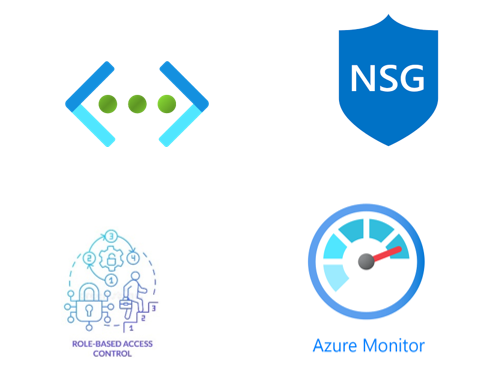
Hands-on experience is essential for Azure interviews, since interviewers frequently focus on what candidates have personally implemented. Detailing deployments, setups, and troubleshooting procedures, such as configuring Virtual Networks (VNets), deploying Network Security Groups (NSGs), administering Role-Based Access Control (RBAC), and monitoring resources using Azure Monitor, exhibits production readiness. Practical experience reassures recruiters that candidates can handle real Azure workloads, solve problems effectively, and grasp operational implications in addition to theoretical understanding.
Importance of Personal Projects and Real-World Implementations
Personal projects demonstrate strong, practical Azure skills and are used to evaluate candidates during interviews. Interviewers like projects that show full implementation, such as developing and deploying a web application with Azure App Service, Azure SQL Database, and Application Insights.

Candidates should be able to confidently discuss architectural decisions, obstacles, financial considerations, and major lessons learned. The emphasis is still on clear rationale and excellent execution, rather than the overall size or complexity of the project.
Communication Skills in Azure Interviews
Clear communication is critical in Azure roles, especially when applicants must explain complicated cloud systems to both technical and non-technical stakeholders. Interviewers pay special attention to how confident, logical, and precise candidates express their answers and thought processes. For example, presenting a multi-tier Azure architecture in simple, structured words displays not just excellent technical mastery, but also professional maturity, collaborative abilities, and the ability to communicate successfully within real-world cloud teams.
Explaining Azure Concepts Clearly and Effectively
Interviewers frequently ask candidates to describe Azure concepts to assess their grasp. Clear explanations demonstrate complete understanding. Scalability, availability, and elasticity should all be explained clearly by Fundamentals candidates. Analogies are encouraged for demonstrating competence. At the Associate level, explanations must contain practical examples, such as how auto-scaling works in Azure App Service or how availability zones improve resilience. Expert and Specialty candidates should explain design implications, constraints, and trade-offs. Interviewers assess whether applicants understand not only how a feature works, but when and why it should be used.
Using Analogies and Diagrams to Support Technical Explanations
Analogies and simple representations dramatically improve interview responses by making complex Azure architectures more understandable. Interviewers look for applicants who can physically or verbally simplify designs, such as comparing Azure regions to offices in different geographical areas to demonstrate redundancy and high availability. This competence matches actual professional communication, in which architects and engineers must clearly explain technical decisions to a variety of audiences, including management, clients, and non-technical stakeholders.
Prepare and Master Azure Interviews with VERSAtile Reads
How VERSAtile Reads Aligns with Interviewer Expectations
Azure interviews demand more than isolated preparation. They require a blend of technical depth, architectural thinking, hands-on practice, and communication skills.
This is where VERSAtile Reads stands apart.
The Complete Azure Interview Companion is designed around how interviewers actually evaluate candidates, not just exam objectives. It combines certification-aligned Q&A, scenario-based problem solving, architecture reasoning, and stakeholder-focused communication guidance into a single structured resource.
Instead of training candidates to memorize answers, VERSAtile Reads prepares professionals to think, explain, and decide like real Azure practitioners.
FAQs
Q1. What do Azure interviewers prioritize beyond certifications and service knowledge?
Azure interviewers focus on problem-solving ability, practical experience, and communication skills. They assess how candidates apply Azure services in real-world scenarios, handle failures, explain technical concepts clearly, and align decisions with business objectives. Strong candidates demonstrate reasoning, hands-on expertise, and professional judgment rather than simply memorizing features.
Q2. How important are personal projects for Azure interviews?
Personal projects are highly valued because they showcase the practical application of Azure skills. Interviewers look for full implementations, such as web apps using Azure App Service, SQL Database, and Application Insights. Candidates should be able to explain architectural choices, challenges faced, and lessons learned, emphasizing execution and rationale over project complexity or size.
Q3. How can analogies and diagrams improve Azure interview performance?
Analogies and diagrams help candidates explain complex Azure architectures effectively to both technical and non-technical audiences. For example, comparing Azure regions to offices in different locations demonstrates redundancy and availability. Using visuals or simple comparisons shows clarity of thought, communication skills, and the ability to translate technical decisions into understandable explanations.